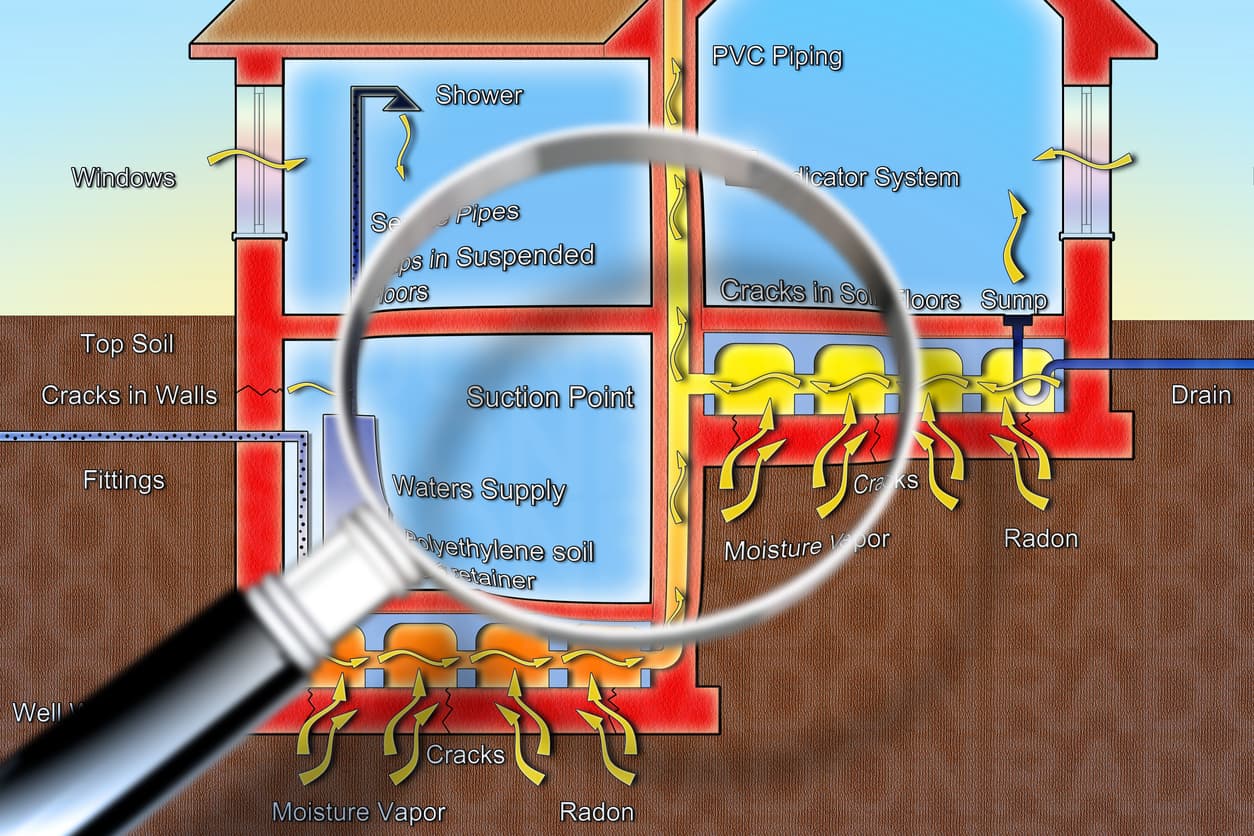
Radon is a radioactive gas that is incredibly common in Utah and is the leading cause of lung cancer in non-smokers. This gas is created when uranium in the ground decays, and it then rises into the air we breathe. Nearly 50% of Utah homes have high radon levels, but unfortunately Utah does not have many laws to protect residents from radon exposure.
Buying and selling a home
When selling a home, homeowners must answer the hazardous conditions question, “Are there any hazardous conditions on the Property such as Radon gas in house or well?” However, this is only based on the owner's “current actual knowledge,” not a current requirement to test for it. If a homeowner tested years prior, or never tested at all, they could answer no to that question even if the home currently has a high level of radon.
Additionally, county treasurers must include information about radon, testing, and mitigation with property tax notices as of September 2023. While education is important, and this is a positive step, many people still do not understand how critical it is to test every two years.
Renting a home or apartment
Landlords and property managers are not required to test for and disclose the radon level in a dwelling when someone rents from them, which means tenants may not know they are being exposed to a gas that can give them lung cancer. Tenants often rely on their landlords and property managers to keep the environment safe, and if laws are not put in place to protect tenants, there may be unnecessary risk taken.
According to Radonova, only four U.S. states require landlords to disclose radon levels in their rental properties (Colorado, Florida, Illinois, and Maine). Of those four states, only two (Colorado and Illinois) give tenants the right to terminate their lease if high radon levels are found and the landlord opts not to install a mitigation system.
Daycare centers and schools
There are currently no laws in Utah that protect children in daycare centers and schools from radon exposure. This is especially critical because children have a higher respiratory rate, which means they may breathe in more radon than adults during critical developmental stages. Even more, radon has been connected to childhood leukemia and attention deficit disorders. Some parents in Utah have reached out to their child’s school district to have radon testing implemented, but it’s still not a wide practice and is not regulated by law.
New construction
While some construction companies in Utah automatically include a radon mitigation system in their new builds, it’s not required by law. New homes tend to be more energy efficient, but those same techniques can also trap more radon in a home. It’s important for new buildings to include a radon mitigation system to protect the long-term health of inhabitants.
Utah has a long way to go when it comes to legal protections against radon. We encourage you to reach out to your local representatives to urge them to enact more protections. Additionally, you can request a radon test by filling out the form on this page.